How Permian Basin petroleum made Ratliff Stadium possible, brought Bissinger to a city in crisis, and explains why football was never just a game in Odessa
Odessa did not choose football over everything else out of some vague regional mysticism. It chose football because oil made the choice logical, and then oil took that logic away, and then oil returned it, and the cycle repeated often enough that the stadium outlasted two crashes and the book that documented them. To understand why the Permian Panthers carry the weight they do in the culture — in H. G. Bissinger's book, in the 2004 film, and in the fictional Dillon of the NBC/DirecTV series — you have to start not on the field but underneath it, in the Permian Basin, the sedimentary formation that runs beneath West Texas and southeastern New Mexico and holds the oil and gas deposits that Odessa was built to service.
The boom that built the stands
The Permian Basin's productive fields had been worked since the 1920s, but the period that matters most for the football program began in the post-war decades, accelerated through the 1960s and 1970s, and reached its peak in the years just before the collapse. Oil-patch money — from drilling contracts, service companies, roughneck wages, and the ancillary businesses that follow extraction workers — circulated through Ector County at a rate that made public spending on schools feel almost unlimited. The Ector County Independent School District became the institutional beneficiary of this windfall. Tax revenues tied to assessed petroleum extraction values funded construction and equipment at levels that comparable-enrollment districts in less extractive economies could not approach.
The clearest single monument to that era is Ratliff Stadium. Built in 1982 at a cost of approximately $5.6 million, it seated more than 19,000 people — a number that would be respectable for a minor-league professional facility and is extraordinary for a public high-school ground. Odessa could build it because the oil-patch economy was still near its apex. The stadium's scale was not vanity, or not only vanity: it reflected a genuine expectation, grounded in recent experience, that the district could afford to maintain and fill a facility of that size. Within four years, the assumption was in ruins.
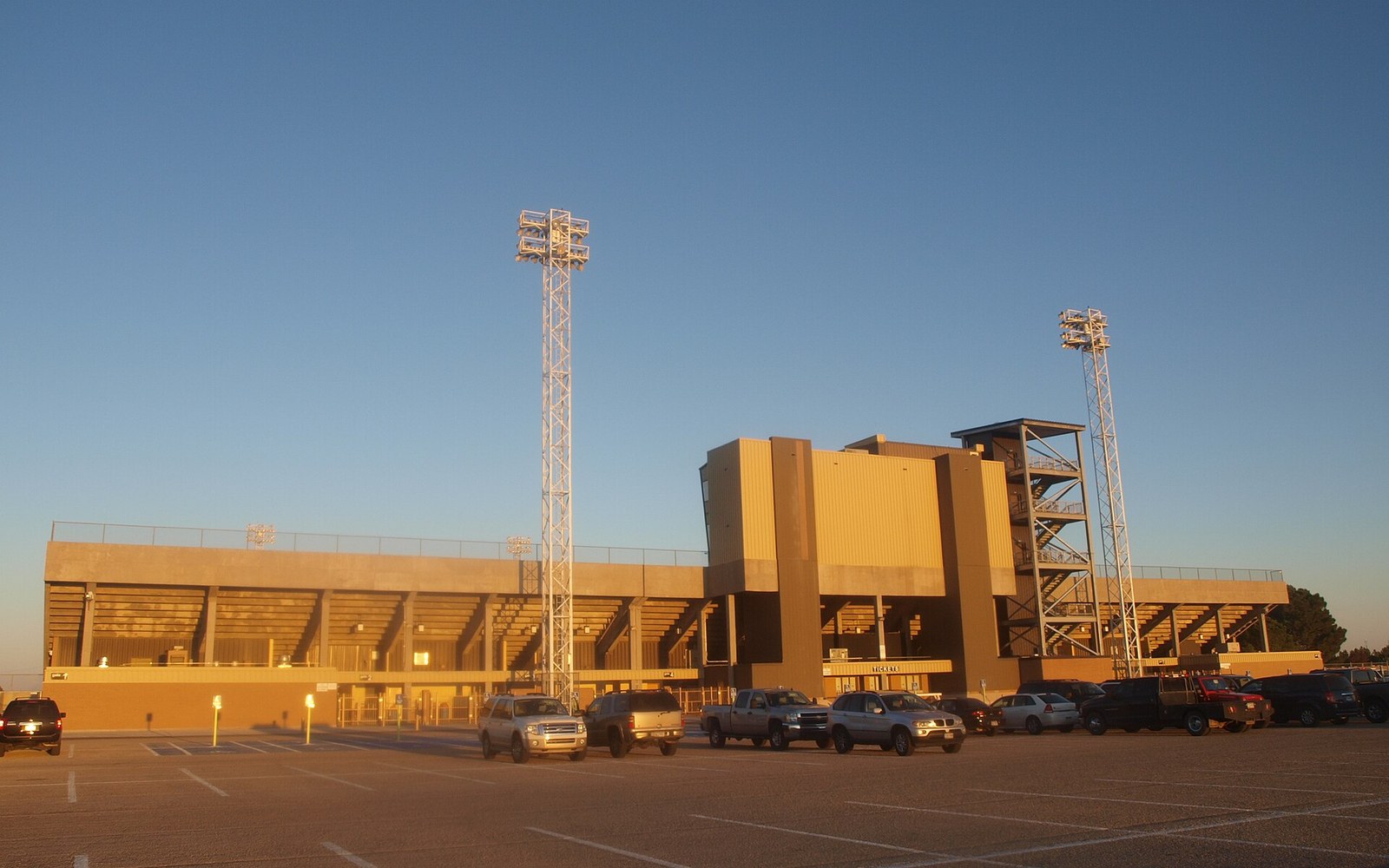
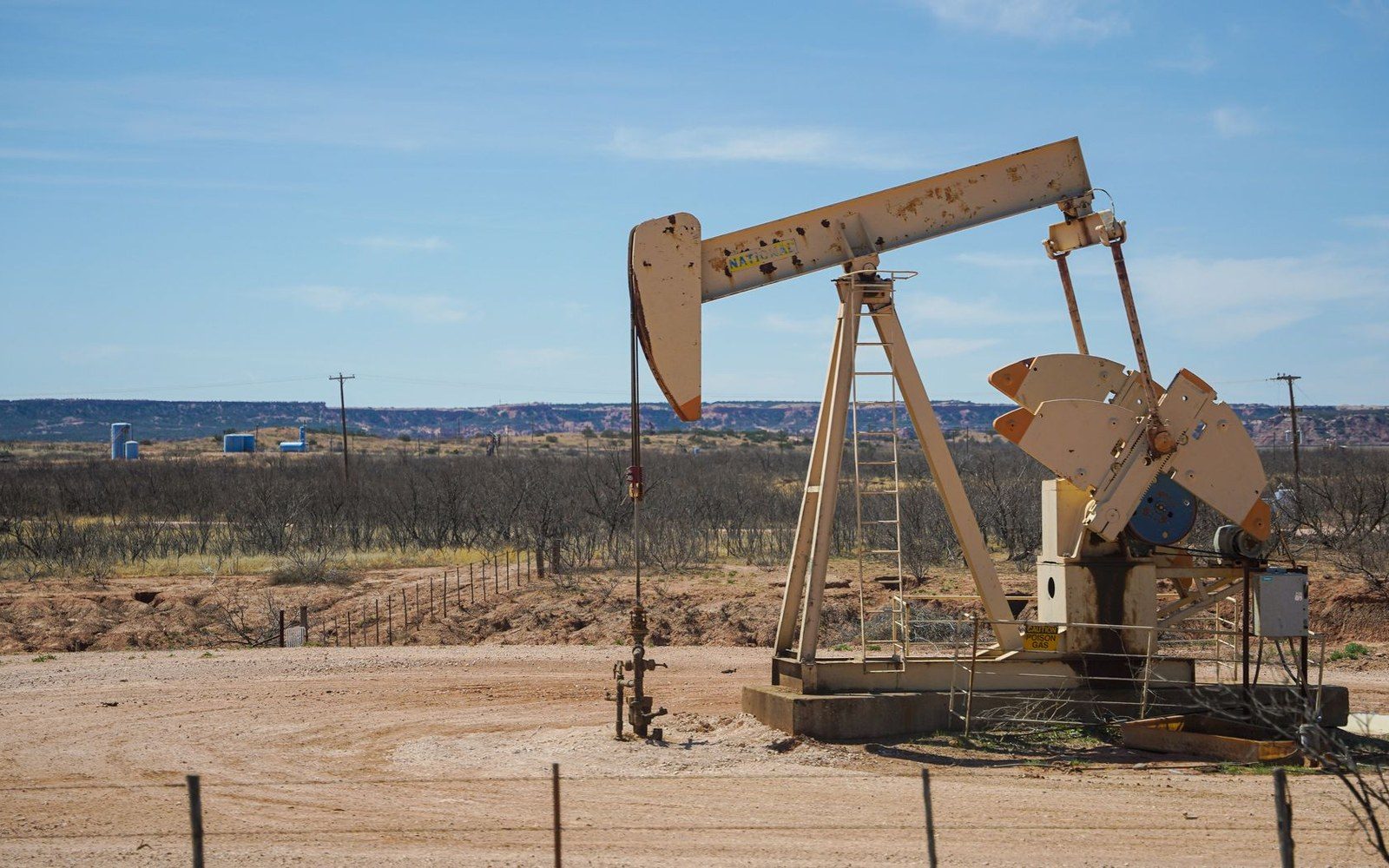
Ratliff Stadium seats 19,302 — roughly a fifth of the city Odessa was at the 1980 census. The district's income has followed the Permian Basin since before the stadium was built.
Photo: Ratliff stadium · Wikimedia Commons · Photo: jayjay13 / PexelsWhat Bissinger walked into
The global oil price collapse of the mid-1980s hit the Permian Basin with a force that reshaped every institution dependent on extraction revenue. West Texas crude prices dropped dramatically, and Odessa, which had no economic diversification to absorb the shock, contracted hard. Unemployment climbed sharply. Property values fell. Businesses that had opened during the boom closed. The city's population, which had swelled through the 1970s, began to fall as workers followed the work elsewhere.
It was into this deflated version of Odessa — not the confident boomtown, but the anxious, diminished city that the crash had left — that Bissinger arrived in 1988 to spend a season embedded with the Permian program. The reporting he produced, published in 1990, captured a community that had staked its civic identity on football precisely because so many other sources of pride had been stripped away. The book that became Friday Night Lights is not a story about a prosperous town that loves its football team. It is a story about a struggling town that needs its football team to perform a function the economy no longer could: to confirm that Odessa was still capable of excellence, still capable of producing something the rest of Texas respected.
The University Interscholastic League classification system had placed Permian in the highest competitive tier. The Panthers had won UIL state titles in 1965, 1972, 1980, 1984, and 1989, building a record of achievement that gave the community a coherent narrative of success during years when the surrounding economy offered no comparable narrative. Booster culture — the organized financial and social infrastructure of parent groups, business donors, and politically connected supporters — became the mechanism through which the community directed its remaining energy and disposable income toward the program. When oil revenues declined, the proportional emotional and financial investment in football did not decline with them; in some measurable sense it intensified, because the program had become one of the few reliable sources of civic affirmation left.
The structure of a civic identity built on a single industry
The relationship Bissinger documented between the oil-patch economy and the football program was not simply one of funding, though the funding connection was real and important. It was also a relationship of cultural logic. The extraction economy had trained Odessa to think in terms of boom cycles: periods of extraordinary abundance followed by sudden contraction, with the community's role being to maximize output during the good years because the good years were finite. High-school football operated on a version of the same calendar. A recruiting class moved through in four years. A championship window was narrower still. The pressure to win now — the pressure Bissinger observed bearing down on the coaches, the players, and particularly on figures like Gary Gaines — was the pressure of a community that understood, from lived experience, that favorable conditions do not last.
That cultural logic helps explain something that outside observers often find difficult to account for: why the scrutiny applied to a seventeen-year-old running back or a high-school head coach could exceed, in its social intensity, the scrutiny applied to elected officials or business leaders. In a single-industry town with a boom-and-bust rhythm, the football program had absorbed the psychological functions that a more diversified community might distribute across multiple institutions. When James "Boobie" Miles suffered a knee injury during the 1988 season, the grief in the community was not simply grief about a player — it was grief about a concentrated asset, about a year's worth of championship expectation, about the possibility that this particular window might close without delivering what the community needed it to deliver.
The cycle continues
The particular bust Bissinger documented was not Odessa's last encounter with contraction. The Permian Basin remained central to Texas petroleum production, and the community's fortunes continued to track global oil markets in the decades after the book's publication. The 2000s brought renewed drilling activity; the shale revolution of the 2010s brought another surge, with Odessa again attracting workers and revenue at rates that recalled earlier booms, until the oil-price collapse that began in late 2014 brought layoffs and contraction back to the basin a second time. Each cycle reaffirmed the town's foundational dependency, and with it the conditions that make the football program's function so load-bearing.
Ratliff Stadium still stands, maintained by Ector County ISD, its 19,000 seats a structural artifact of the confidence the 1970s oil economy generated. The 6A stadium arms race that has since produced the Allen ISD and McKinney ISD facilities — each costing multiples of what Ratliff cost in 1982 — reflects the same underlying logic at greater scale: oil-patch and suburban tax-base money finding its way into turf and lights and scoreboard technology, because in Texas, the stadium is how a community shows the world what it believes itself to be worth. Odessa built that argument in steel and concrete in 1982. Everything Bissinger found six years later, and everything the film and series subsequently made of it, flows from that original bet on petroleum permanence — and from what happened when the market called the bet in.