When Odessa Built for the Future It Thought It Had
The bond election that funded Ratliff Stadium passed in the years just before 1982, at the last moment in Odessa's modern history when such a vote felt inevitable rather than audacious. Oil prices had not yet collapsed. The Permian Basin was still returning royalties that seemed to justify almost anything the community wanted, and what Ector County wanted, with notable urgency, was a football stadium worthy of the Permian Panthers. The district built one for $5.6 million, with 19,302 permanent seats, on a flat expanse of West Texas scrubland off 42nd Street — and named it for a local oil executive, Fred Ratliff Jr., whose family's connection to the petroleum economy that made the whole project possible was not incidental.
The scale was a statement. In 1982, most American cities of Odessa's size were playing high-school football in facilities a fraction as large. What Ector County Independent School District constructed was a purpose-built cathedral for a single sport, with the kind of infrastructure — field lighting powerful enough to read by, press boxes, a full scoreboard — that suggested permanence and civic priority in equal measure. The stands were aluminum bleachers arranged in two main decks, the upper rising steeply enough to give almost any seat a clean sightline to the hash marks. On autumn Friday nights at capacity, Ratliff was louder than many small-college venues.
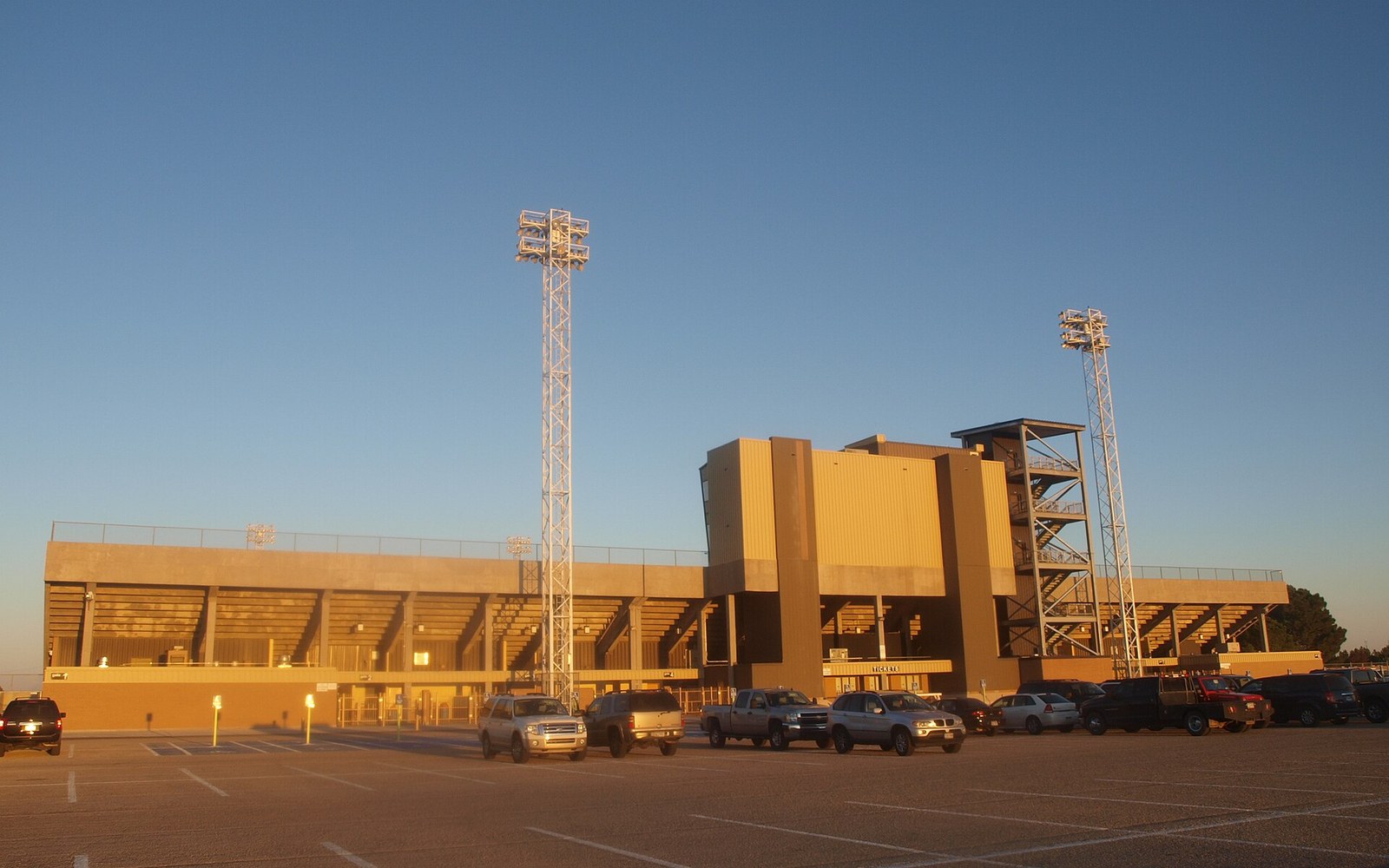
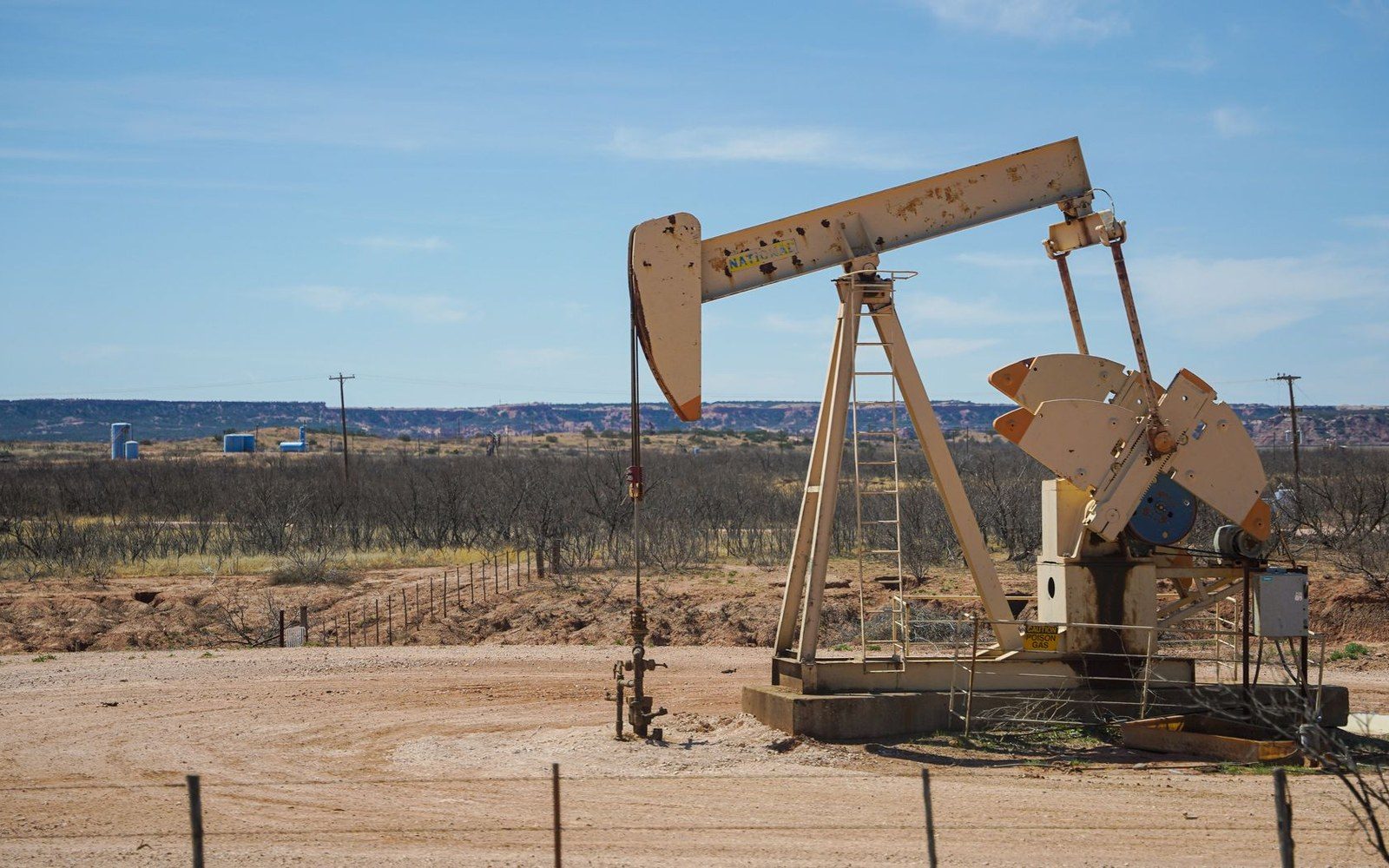
Ratliff Stadium seats 19,302 — roughly a fifth of the city Odessa was at the 1980 census. The district's income has followed the Permian Basin since before the stadium was built.
Photo: Ratliff stadium · Wikimedia Commons · Photo: jayjay13 / PexelsThen, in 1986, oil prices collapsed. The Permian Basin's boom-and-bust cycle — the oil-patch economy that had funded the stadium — reversed with the speed it always eventually does. Odessa lost population, businesses shuttered along the main commercial strips, and the school district felt the contraction in its operating budgets in ways that the sunk cost of the stadium could not address. By the time H. G. Bissinger arrived in the summer of 1988 to spend a season embedded with the Permian program, the stadium was already a monument to a different economic moment — massive, functional, and slightly incongruous in a city visibly tightening its belt. Bissinger registered that incongruity precisely. In Friday Night Lights, published in 1990, Ratliff appears not merely as a venue but as evidence: the community had built at the scale of its richest fantasies, and the football program remained the one institution that the community would not allow to diminish regardless of what happened to everything else.
The boosters sustained the program through the lean years, filling Ratliff on Fridays even when other civic spending contracted. The University Interscholastic League classification system placed Permian in the largest tier, competing against Texas's most populous schools, which meant the stadium's size was also a practical necessity — playoff crowds regularly tested the facility's limits.
When Peter Berg's production crew arrived in 2003, they found Ratliff essentially as Bissinger had described it: big, weathered, and unchanged in character. Berg, who had read Bissinger's book and understood the stadium's symbolic weight, chose to shoot there rather than in a more convenient Texas facility. The decision gave the film an authenticity that was immediately legible — the particular angle of the West Texas light in the stands, the specific flatness of the surrounding landscape visible beyond the end zones, the stadium's aluminum surfaces that photographed with a quality no production design could have manufactured. Tobias Schliessler's cinematography made the physical scale of the place feel both triumphant and melancholy, which was exactly what the stadium actually was.
The 1982 construction cost works out to roughly $290,000 per thousand seats — an investment that, by the standards of what Texas school districts would later spend on the same aspiration, looks almost modest. Allen ISD opened a $60 million stadium in 2012; McKinney ISD followed with a $70 million ground in 2018. Against those figures, Ector County's original $5.6 million bond reads as the document of a different era: a West Texas oil town in the last flush of its boom, building as if the money would always come.