A Championship Record Carved Out of West Texas Caliche
Permian High School in Odessa, Texas, opened in 1959, and within six years its football program had won its first UIL state championship. That 1965 title was not a fluke — it was the opening statement of a record that would eventually include championships in 1972, 1980, 1984, 1989, and 1991, a total of six titles across twenty-six seasons. The program's nickname, Mojo, became a byword for sustained excellence in a classification system that pits the largest Texas schools against each other, where talent pools run deep and margins are narrow.
The University Interscholastic League sorts Texas schools by enrollment, and Permian has consistently competed at the top tier — what is now designated 6A, though the classification nomenclature changed over the decades. Competing at that level means meeting programs from Dallas, Houston, and San Antonio, cities with tax bases and population densities Odessa cannot match. That Permian assembled a dynasty at all is inseparable from the particular economy that surrounded it: the Permian Basin's petroleum reserves, which funded Ector County ISD with royalty-driven tax revenues and made Odessa's booster culture among the best-capitalized in the state.
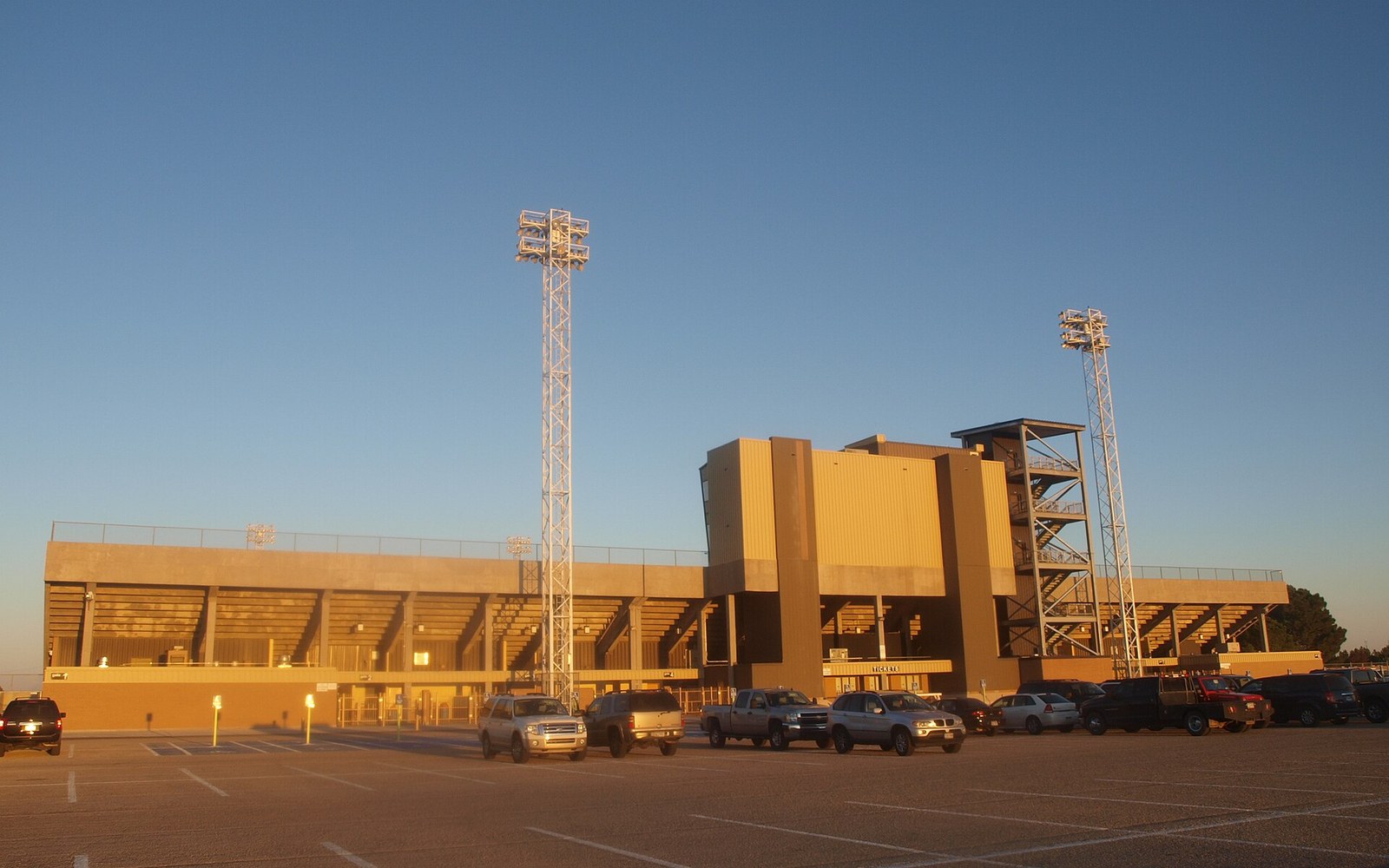
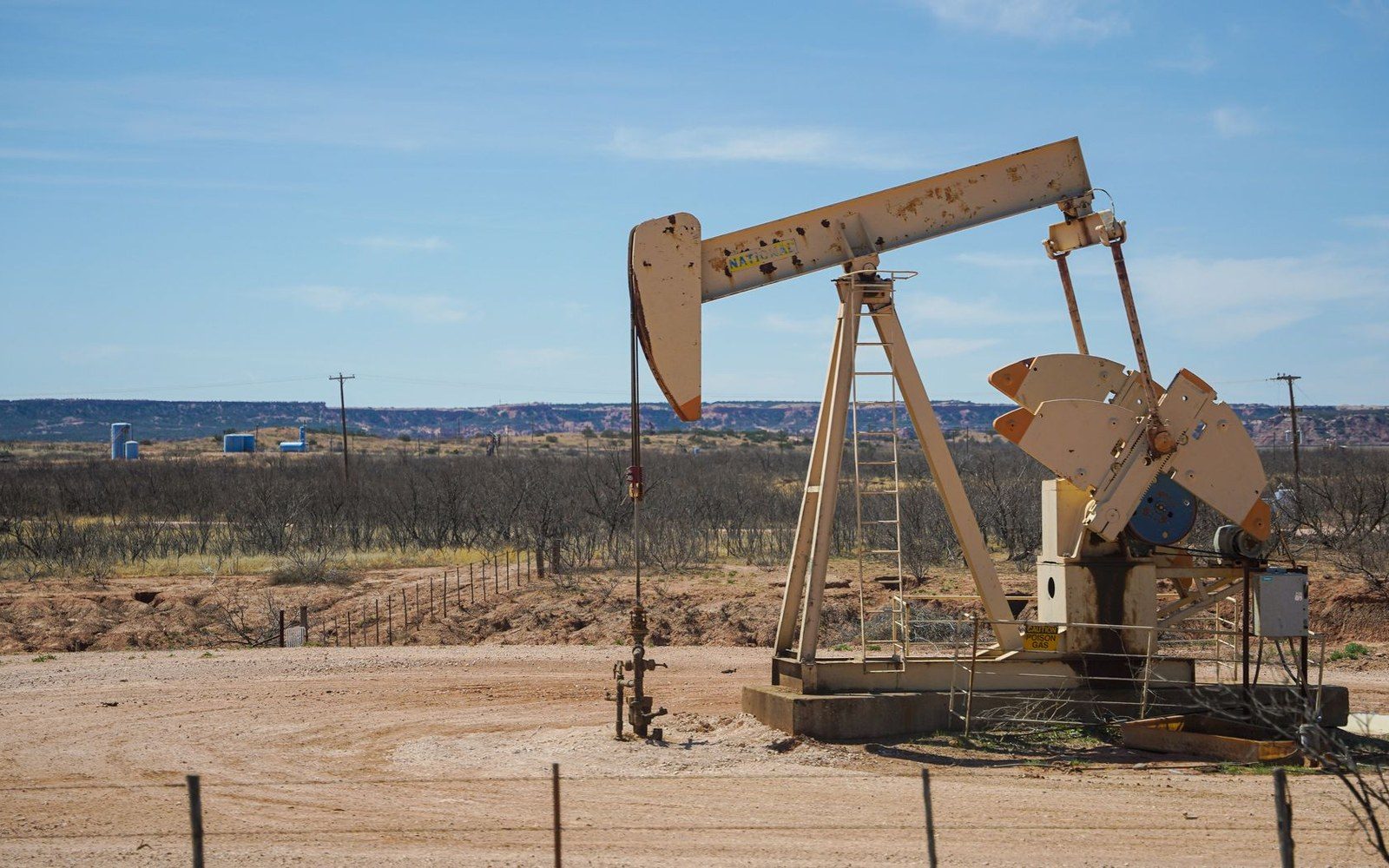
Ratliff Stadium seats 19,302 — roughly a fifth of the city Odessa was at the 1980 census. The district's income has followed the Permian Basin since before the stadium was built.
Photo: Ratliff stadium · Wikimedia Commons · Photo: jayjay13 / PexelsOil Money and the Architecture of a Dynasty
The timing of Permian's title runs correlates closely with the boom cycles of West Texas crude production. The 1972 and 1980 championships arrived during periods of high oil-field activity and municipal confidence. The 1980 title, in particular, came near the peak of a boom that would see Odessa's population swell and Ratliff Stadium — opened in 1982 at a cost of $5.6 million and seating 19,302 — constructed on the assumption that prosperity was structural, not cyclical.
The 1984 championship followed hard on that stadium's opening, when the facility was still new and the community's investment in the program was at its most visible. By the time H. G. Bissinger arrived in Odessa to report what would become his 1990 book, the 1988 season he documented was shadowed by the bust that had followed the boom — oil prices had collapsed in 1986, and the municipal confidence that built Ratliff Stadium had curdled into anxiety. That anxiety is one reason the pressure on the Permian program felt so acute in Bissinger's account: when the economy contracts, the football program becomes the one civic institution that still performs.
The 1989 title — the season immediately following the one Bissinger reported — and the 1991 championship arrived in a community still reckoning with economic contraction, which made both victories freighted with significance beyond sport. The team's success in those years was read locally as proof that what the town had built, and what the oil economy had financed, could survive the price of a barrel falling.
Bissinger's book reached a community still reckoning with economic contraction. It landed in 1990 between the 1989 and 1991 titles, during what Odessa experienced as a moment of hard-won vindication, and was read there as an indictment. What the championship record actually shows, set against enrollment figures and the UIL's classification tiers, is something more structural: Permian sustained competitive dominance across a twenty-six-year span by converting petroleum-economy surpluses into facilities, coaching salaries, and a booster infrastructure that smaller districts could not replicate. The titles were built on caliche and crude, on a community that understood football as a public good worth funding at a level that would look extravagant almost anywhere else.
Six championships in twenty-six years remains the plain fact underneath every subsequent version of this story — the book, Peter Berg's 2004 film, the NBC/DirecTV series. The mythology needed a real record to stand on, and the record was real.