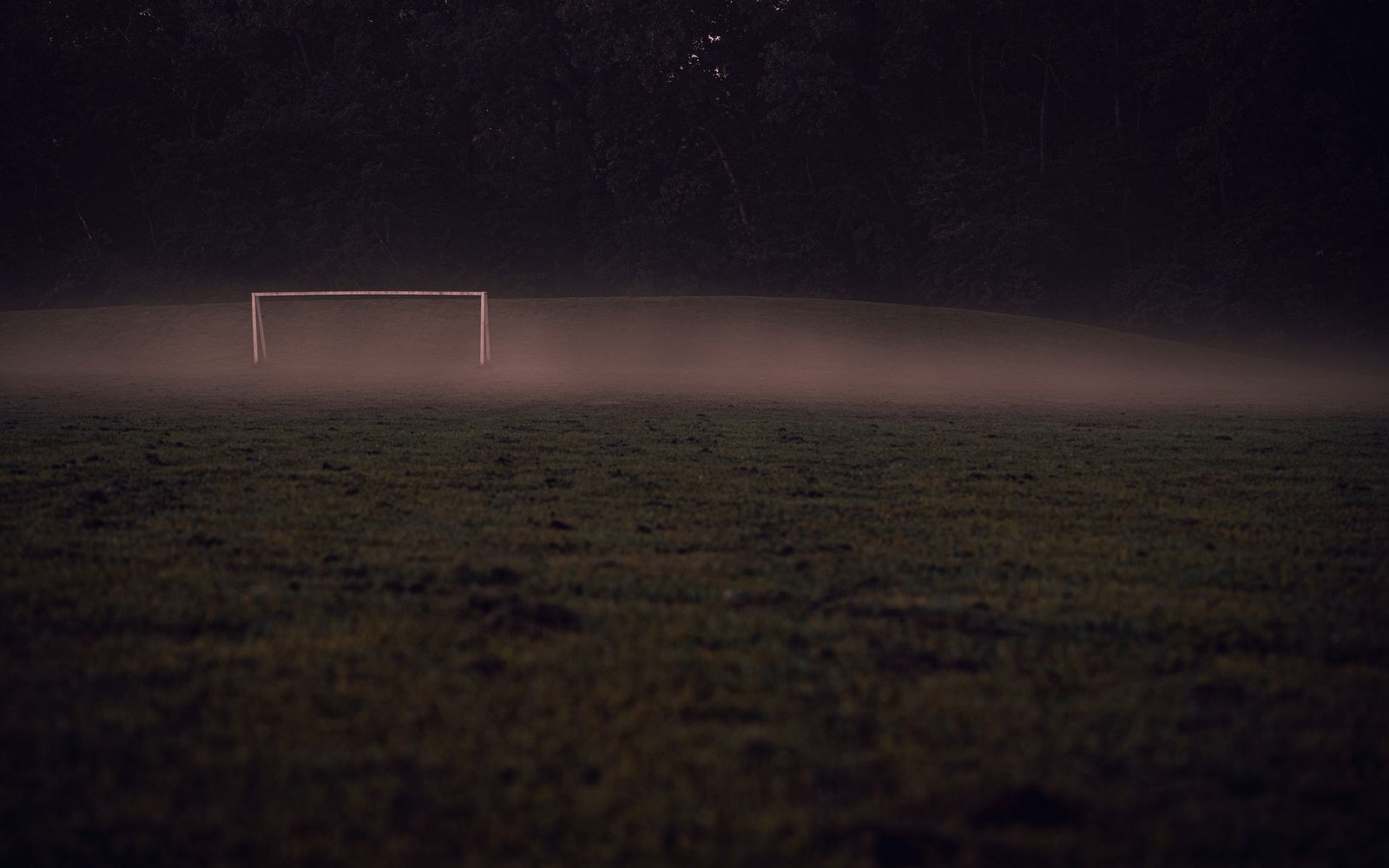
The director was already connected to the material before a studio agreed to fund it — and that connection shaped every location decision he made.
The Family Tie That Became a Film
Peter Berg is H. G. Bissinger's cousin, a fact that gave him early access to the manuscript and a personal stake in the adaptation that no hired director would have carried. He had read the book before it became a cultural landmark, and when he moved toward directing the feature, that proximity to the source shaped his first and most consequential production decision: he would not shoot in a stand-in Texas town. He would go to Odessa, Texas, and he would use the real stadium.
Ratliff Stadium, built in 1982 at a cost the Ector County Independent School District absorbed during one of the Permian Basin's oil-boom years, seats 19,302 people and was purpose-built for high-school football at a scale most college programs could not match. Its dimensions, its lights, its particular quality of West Texas air — all of it is in the book, and Berg wanted it on film. Substituting a generic Texas stadium would have meant arguing, in every frame, that the specific place did not matter. Berg believed it did.
Shooting at Ratliff meant negotiating access through Permian High School and the Ector County ISD, persuading a community that Bissinger's 1990 book had left with complicated feelings about outside storytellers. The production secured that access, and the stadium appears in the film not as a dressed exterior but as itself — the scoreboard, the press box, the sight lines that place the field inside a West Texas geography of flat horizon and enormous sky.
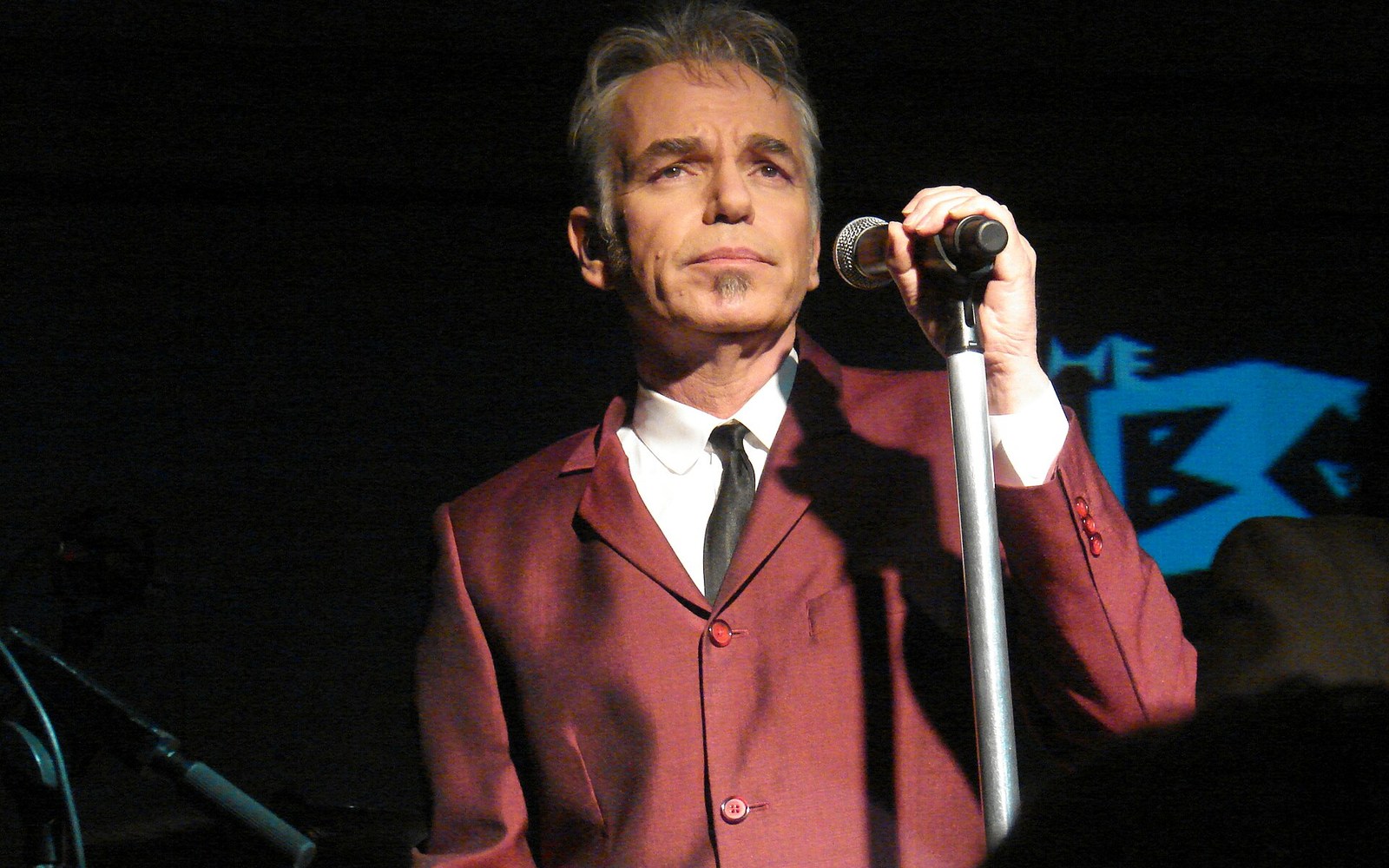
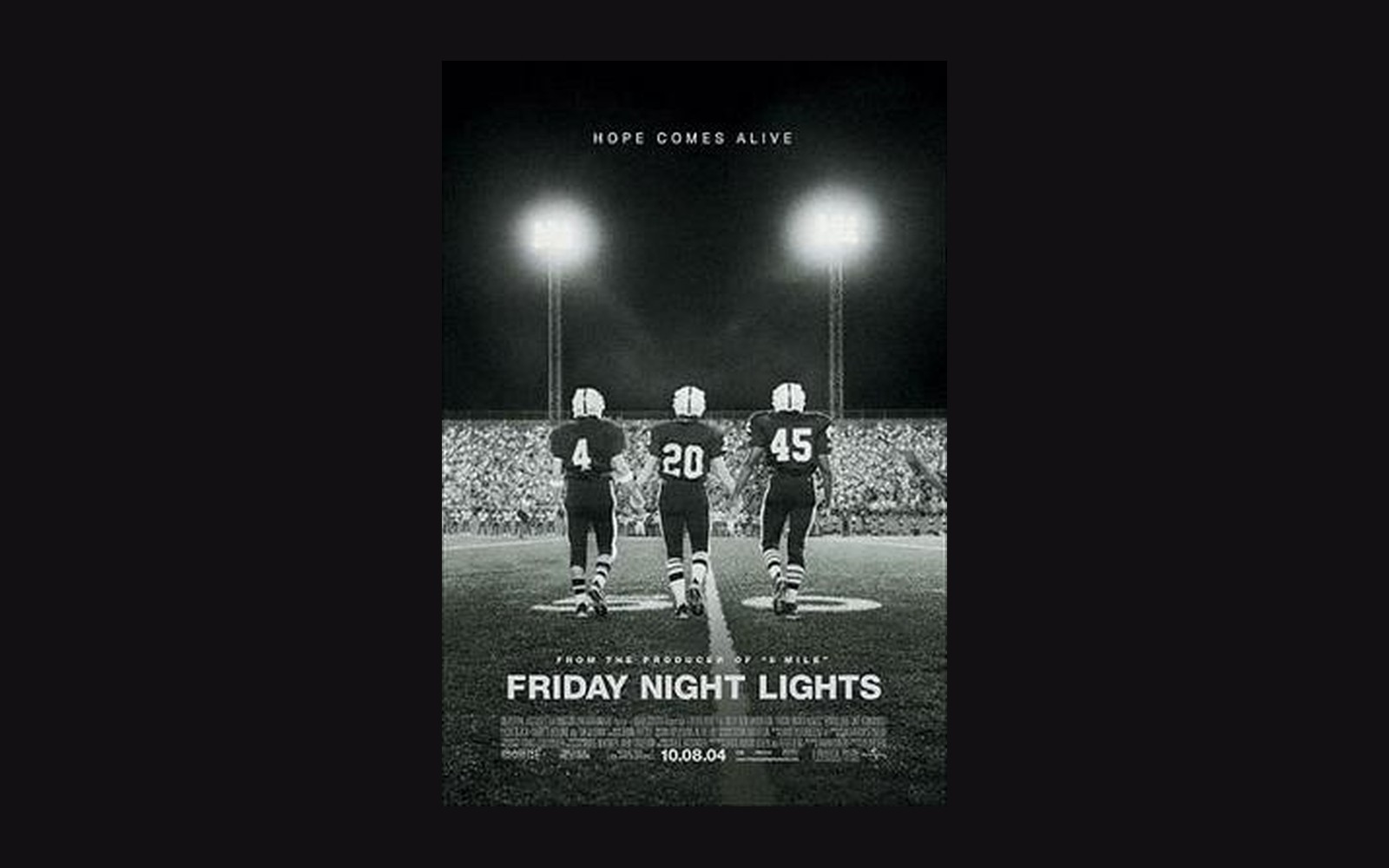
Thornton took the part of a coach written around restraint. Universal's one-sheet carried the release date and the numbers on three jerseys; the town is not named on it.
Photo: Billy Bob Thornton 2008 (2) · Wikimedia Commons · Photo: Friday Night Lights (film) · Wikimedia CommonsProduction Structure and the Imagine Credit
Brian Grazer's Imagine Entertainment co-produced the film alongside Universal Pictures, the distribution and financing entity that brought it to wide release. Grazer's company, which he runs with Ron Howard, had the infrastructure and the studio relationships to mount a production at this scale — location-heavy, athletically demanding, with a cast that required coordinating football choreography across real game sequences rather than fabricated ones.
Berg and his cinematographer Tobias Schliessler built a visual grammar around the location's actual light and geometry. The flat West Texas landscape offered no shelter from the sky, and Schliessler used that exposure deliberately, placing the stadium's lights against a darkness that felt earned rather than constructed. Where the Odessa material required crowd sequences at scale, the production could draw on a community that already understood, on a cellular level, what Permian football meant — the extras were not performing enthusiasm.
A second unit operated out of Houston for specific sequences, supplementing the Odessa principal photography with material that the geography of the Permian Basin could not provide. Houston's urban infrastructure served sequences that needed a different register of Texas — city traffic, hospital interiors, the texture of a place that is emphatically not the oil-patch flatlands. The two production centers together gave the film its geographical range without requiring the cast to leave Texas.
Release and Return
Universal opened the film on 8 October 2004. According to Box Office Mojo, the domestic theatrical gross reached approximately sixty-one million dollars — a figure that positioned the film as a commercial success relative to its production budget, and one that validated the decision to commit to location authenticity rather than controlled-environment efficiency. Shooting in Odessa cost more in logistics than a studio back lot would have; the screen result persuaded the industry that the cost was justified.
Handheld in the stadium, static and flat in the town: two registers in one film.
Photo: Eden FC / PexelsThe cast Berg assembled — Billy Bob Thornton as Gary Gaines, Derek Luke as James "Boobie" Miles, Lucas Black, and Tim McGraw as the antagonist Charles Billingsley — performed inside a setting that carried its own documentary weight. The stadium had seen the real Gaines coach in it; the real Boobie Miles had run on that field. That history does not appear in the film as a caption or a title card, but it is present in the way the location refuses to become merely backdrop.
Berg's decision to return the camera to Ratliff was a directorial argument as much as a logistical one: that the story H. G. Bissinger had reported in Odessa in 1988 could only be told honestly from inside the place where it happened.