
An Austin post-rock quartet with no vocalist and no conventional songs gave Peter Berg's film its emotional core — an almost unheard-of arrangement for a Universal Pictures studio feature.
A Different Kind of Score
When Peter Berg came to cut footage from the 2004 film, he was already using tracks by Explosions in the Sky as temp music — placeholder audio editors drop into a rough cut before a real composer is hired. The Austin quartet's instrumentals fit the West Texas footage so completely that Berg never replaced them. The band, which had released three albums before the film went into production, ended up providing the bulk of the theatrical score, a decision that Universal Pictures approved with no precedent to point to.
Explosions in the Sky formed in Austin in 1999. The four members — Munaf Rayani, Mark Smith, Michael James, and Chris Hrasky — built their music around the logic of post-rock: rock instrumentation used to construct long-form, dynamics-driven compositions that rise from quiet to overwhelming and back again, with no vocalist, no lyrics, and nothing resembling a verse-chorus-verse structure. Their 2003 record The Earth Is Not a Cold Dead Place had accumulated a devoted following well outside Texas before Berg encountered the catalogue, largely through word of mouth and early online file-sharing communities. The album runs five tracks across fifty minutes, each piece unfolding at its own pace rather than conforming to radio format.
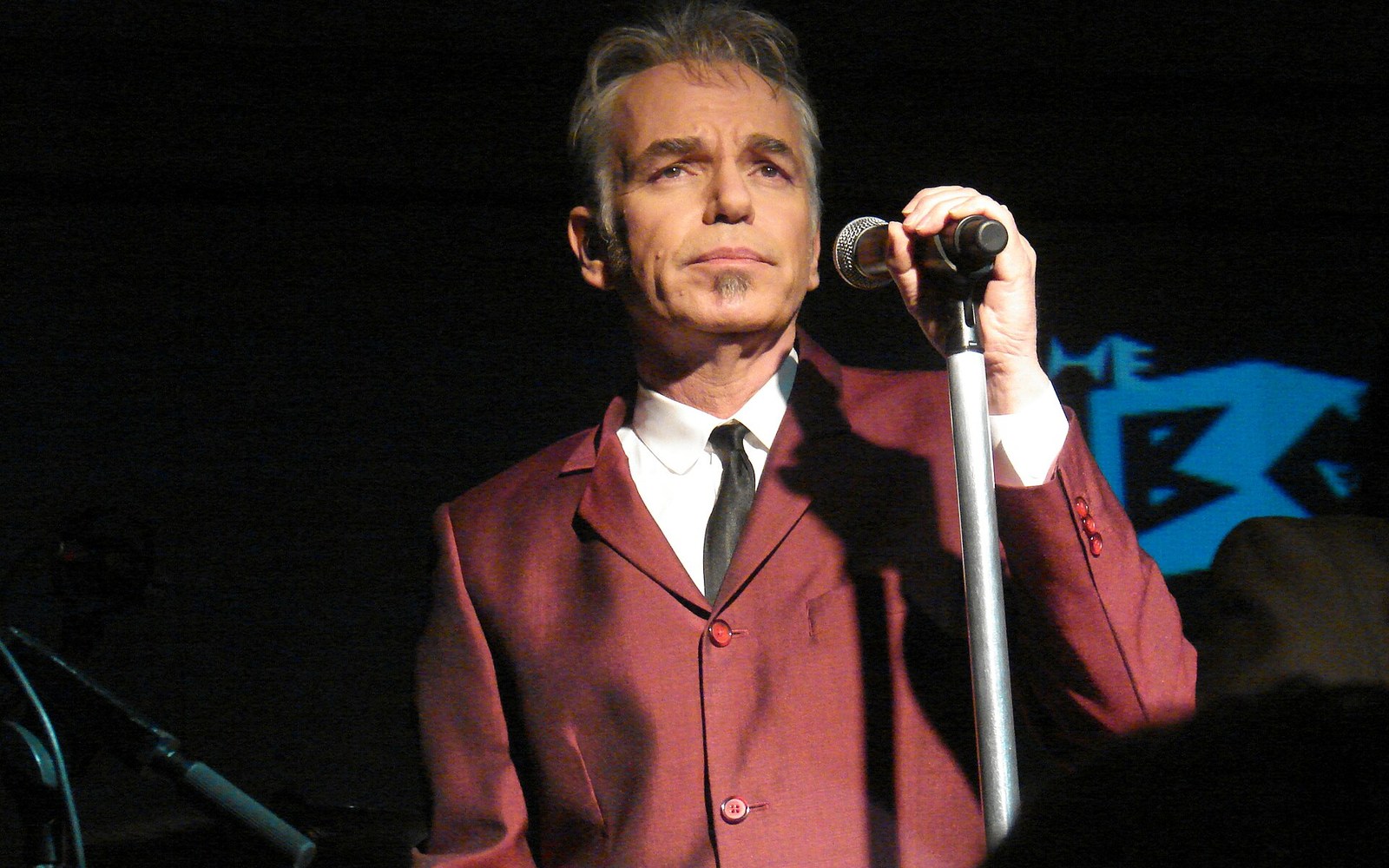
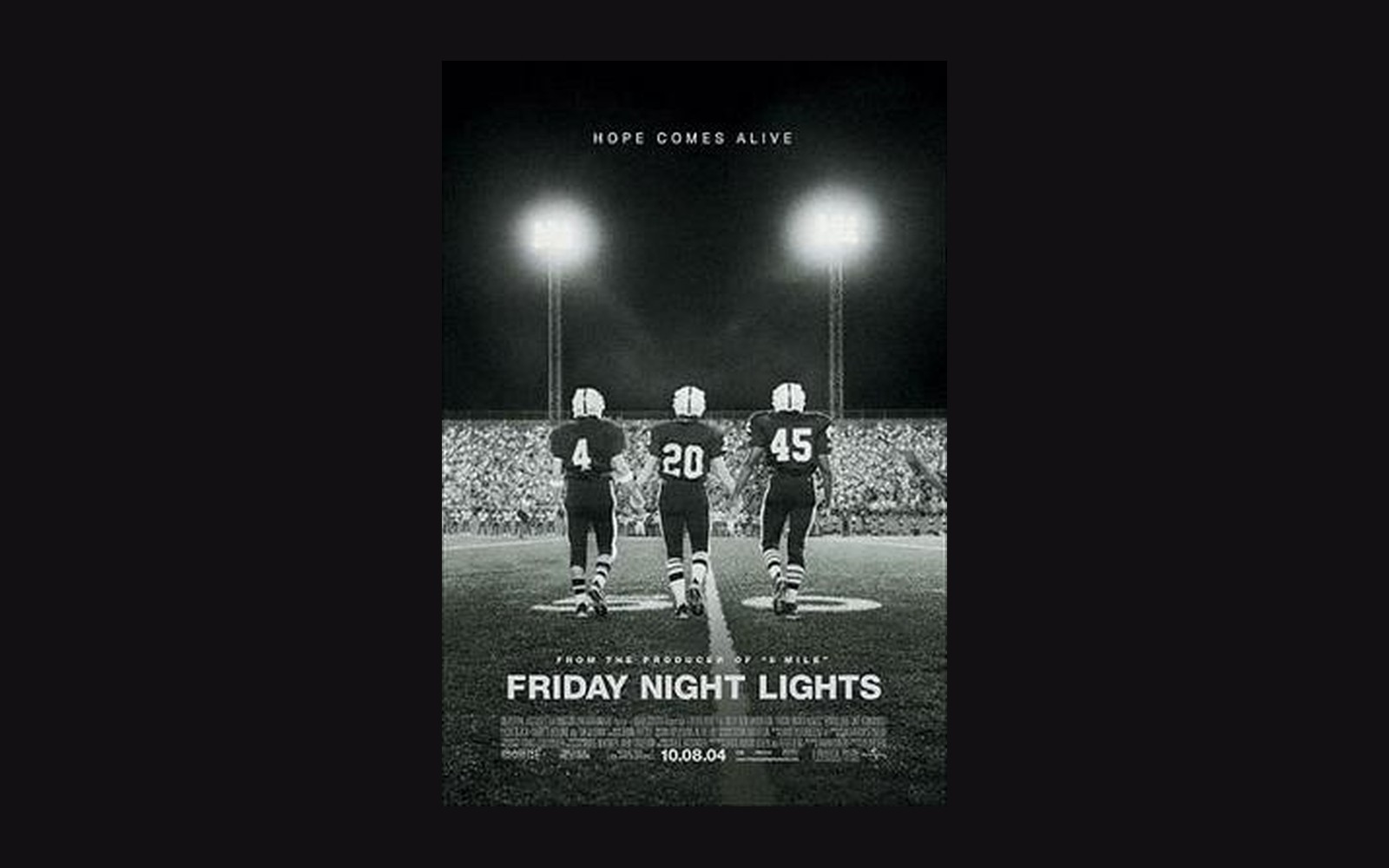
Thornton took the part of a coach written around restraint. Universal's one-sheet carried the release date and the numbers on three jerseys; the town is not named on it.
Photo: Billy Bob Thornton 2008 (2) · Wikimedia Commons · Photo: Friday Night Lights (film) · Wikimedia CommonsThat structural patience is precisely what made the music work against Berg's footage. A conventional film score cues emotion at close range — a melody swells on a close-up, recedes on a cut. Explosions in the Sky builds tension over minutes, which matched the way Berg and cinematographer Tobias Schliessler had shot the film: long handheld passes across the Permian Basin landscape, held on faces longer than studio convention usually allowed. The instrumental tracks did not tell the audience what to feel at a specific moment; they pressurized the atmosphere around the moment and let it breathe.
What the Choice Cost, and What It Gained
Using an existing band's catalogue in place of an original commissioned score carries real structural complications for a studio production. Licensing agreements must be negotiated for every cue rather than handled through a single composer contract; the music cannot be revised or shortened on request without fresh negotiation. Berg accepted those constraints because the alternative — a conventional orchestral score shaped around the edit — risked pulling the film toward the inspirational-sports-movie register he was trying to avoid. The book H. G. Bissinger published in 1990 was not an uncritical celebration of Permian Panthers football or of Odessa, Texas, and Berg's film required music that could hold ambiguity without resolving it into uplift.
The band did record some additional material specifically for the film, working in closer collaboration with Berg than a pure licensing deal would suggest. Their contribution to the soundtrack was later released as a standalone record, Friday Night Lights: Original Motion Picture Soundtrack, which introduced the band to a substantially wider audience. The film's theatrical run — a domestic gross of roughly $61 million, as reported by Box Office Mojo — reached viewers who would not have encountered a post-rock catalogue record on their own, and the band's profile expanded markedly in the film's aftermath.
What survives in the film is the structural gamble itself: a studio picture whose emotional engine runs entirely without language. No lyric tells the audience that a teenager's ruined knee is a tragedy, or that a town's investment in seventeen-year-olds is something more complicated than community pride. The guitars do that work slowly, the way the oil-patch economy and the Friday night rituals they underwrite work on the people living inside them — through accumulation, over time, without a single decisive verse to explain what anything means.