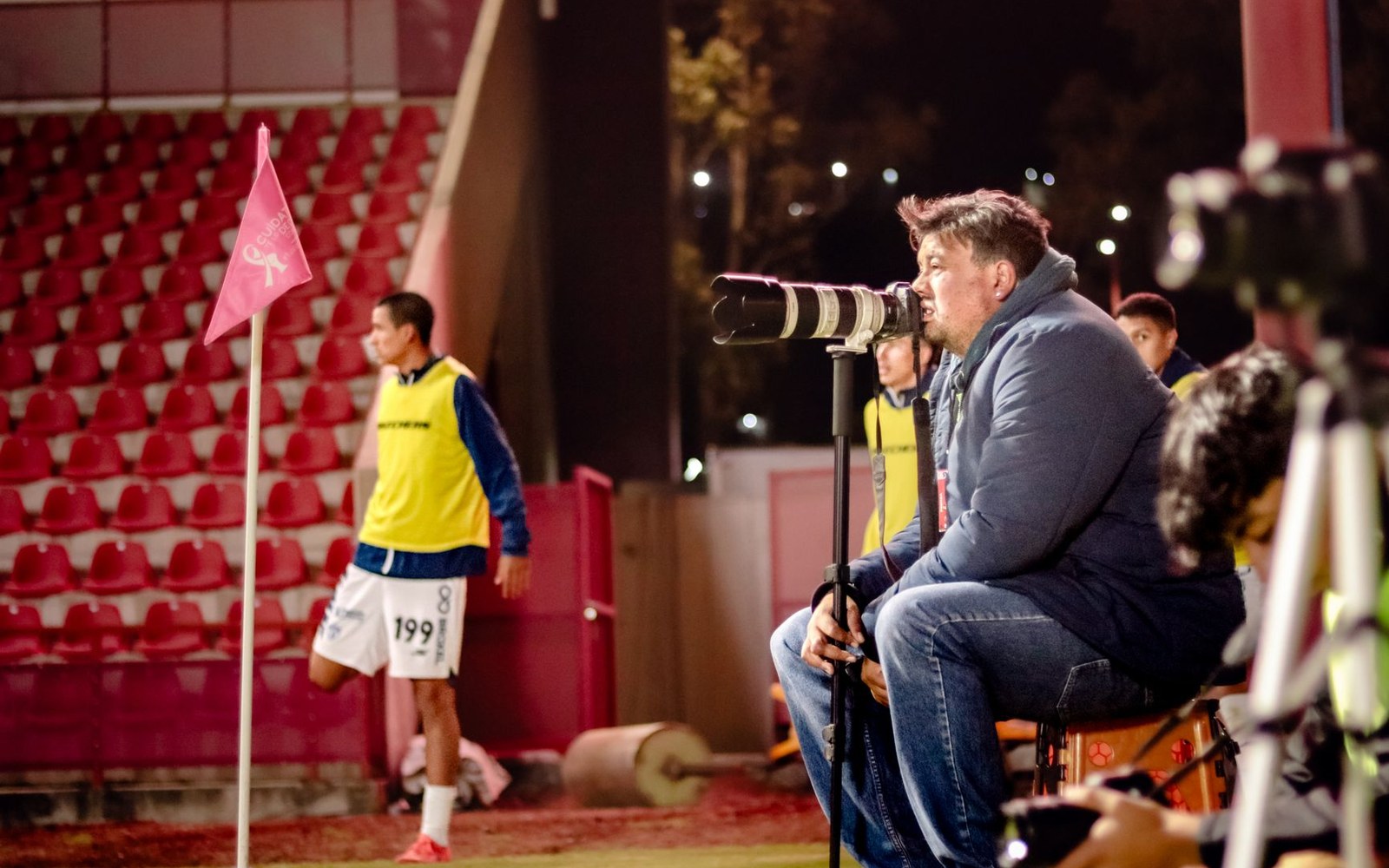
The cinematography that made Odessa look like a place haunted by its own history
Peter Berg hired Tobias Schliessler to shoot Friday Night Lights knowing the film needed to feel documentary-adjacent without becoming a documentary. The result was a visual grammar built on two opposing instincts: the flat, merciless clarity of West Texas daylight and the close, unstable energy of handheld work inside Ratliff Stadium.
Schliessler's exterior photography leans into the actual landscape of Odessa, Texas — the wide sky, the petroleum infrastructure on the horizon, the residential streets that look provisional against so much open ground. Rather than softening the Permian Basin's light with heavy filtration, he shot much of the town in the hard, even illumination that West Texas afternoon actually produces. The effect is a place that seems to have no shadow to hide in, which is precisely what Bissinger's book argued about the pressure the community placed on its players.

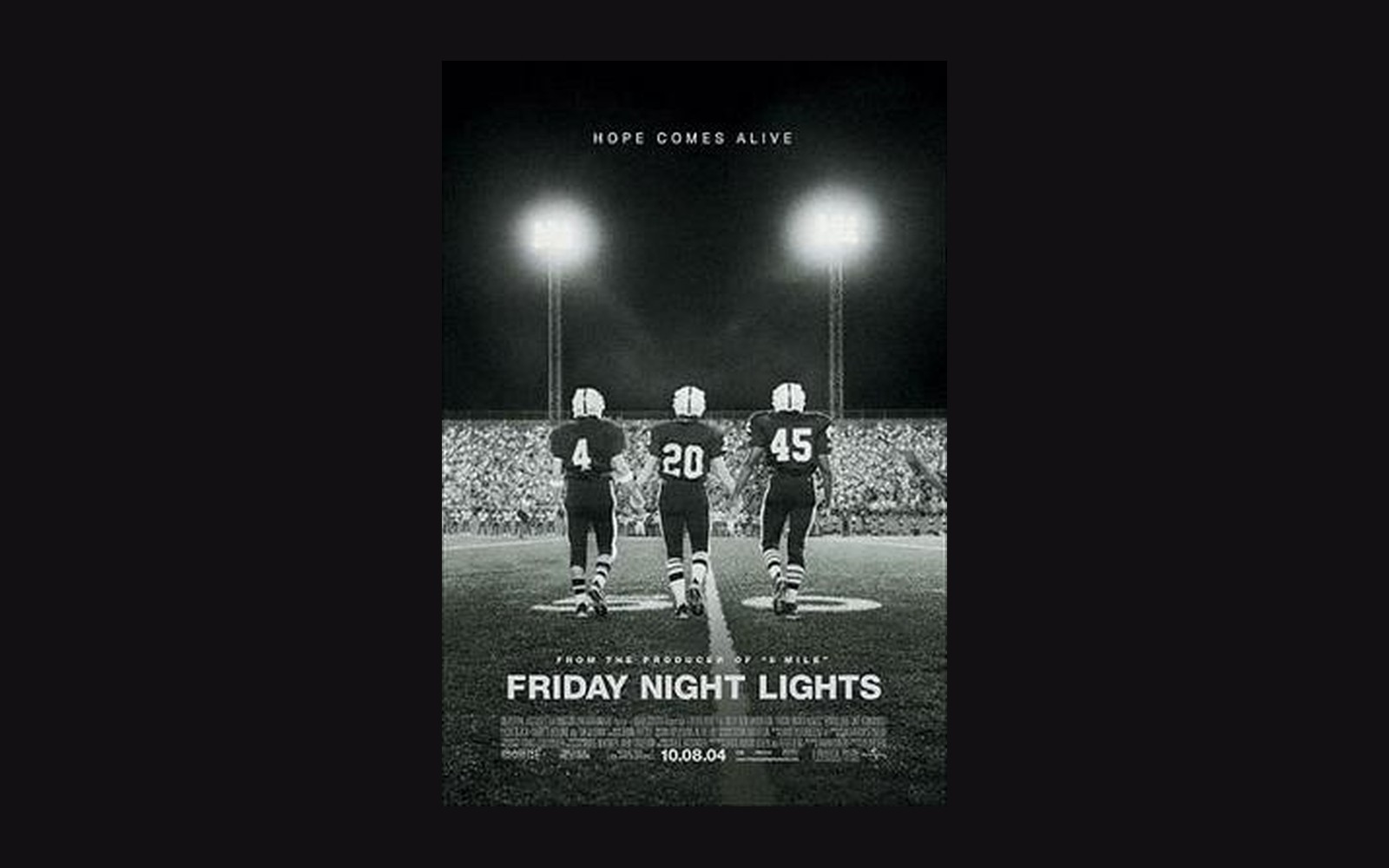
Thornton took the part of a coach written around restraint. Universal's one-sheet carried the release date and the numbers on three jerseys; the town is not named on it.
Photo: Billy Bob Thornton 2008 (2) · Wikimedia Commons · Photo: Friday Night Lights (film) · Wikimedia CommonsInside the stadium, the approach inverted. The football sequences at Ratliff Stadium used handheld cameras that moved with the players rather than observing them from a fixed editorial distance. That technique — the camera operator in the field of play, the frame tilting and recovering — was unusual for a mainstream theatrical release in 2004 and gave the game sequences a texture closer to ESPN footage than to the composed widescreen of conventional sports cinema. Berg and Schliessler had discussed the football coverage in terms of immersion rather than spectacle: the goal was that a viewer would feel the collision before they fully processed it.
The Odessa streetscape received the same unsentimental attention. Schliessler framed the town's houses, churches, and commercial strips without the nostalgic warmth that period-set Americana typically attracts, even though the story is set in 1988. The color palette stays in the ochres and bleached whites that the actual place produces. Memory, in this visual scheme, is not warm — it is overexposed.
The score by Explosions in the Sky reinforced Schliessler's visual mood: both the photography and the music treat the material as something already past, observed from a slight remove, even as it unfolds in the present tense. The combination gave Friday Night Lights an elegiac quality that distinguished it from the conventional high-school sports film and, critics noted at the time, honored the tone Bissinger had established in the book.
Universal Pictures released Friday Night Lights on 8 October 2004, and Schliessler's work on the film contributed to a visual identity distinctive enough that the subsequent NBC/DirecTV series explicitly adopted handheld shooting as its primary production method.