Gaining Access and Moving In
H. G. Bissinger was a Pulitzer Prize–winning journalist at the Philadelphia Inquirer when he arrived in Odessa, Texas, in the summer of 1988 with a proposition that the Permian Panthers' administration found flattering enough to accept. He wanted to live inside one full season of high-school football — not drop in for a few games, not interview the coach at a desk, but move his family to Odessa and follow the program from August two-a-days through the end of the playoff run. Gary Gaines, then head coach at Permian High School, agreed. So did Ector County Independent School District. The access they granted was, by any measure of American sports journalism, extraordinary.
Bissinger relocated his wife and their twin sons to Odessa for the duration. He attended practices, rode the team bus, sat in on coaches' meetings, traveled with the squad to away games, and spent enough time in the homes of players and their families to understand what the season meant at a granular, domestic level. The approach was not invented for this project — the embedded reporting tradition descends directly from literary journalism of the 1960s and 1970s — but the sustained, twelve-month commitment Bissinger brought to it was unusual. He was not a guest at the stadium; he was, for that year, a resident of the program.
What made the access possible was, in part, the atmosphere in Odessa itself. Boosters, coaches, and administrators in football-serious communities often welcome journalists who signal they intend to document success. The Permian program had won four UIL state championships by 1988 and carried an identity built around winning. There was no particular reason for the school to expect the resulting book would be anything other than a celebration of what the town called "Mojo" — the tribal pride the Panthers had accumulated over decades on the oil-patch economy of the Permian Basin.
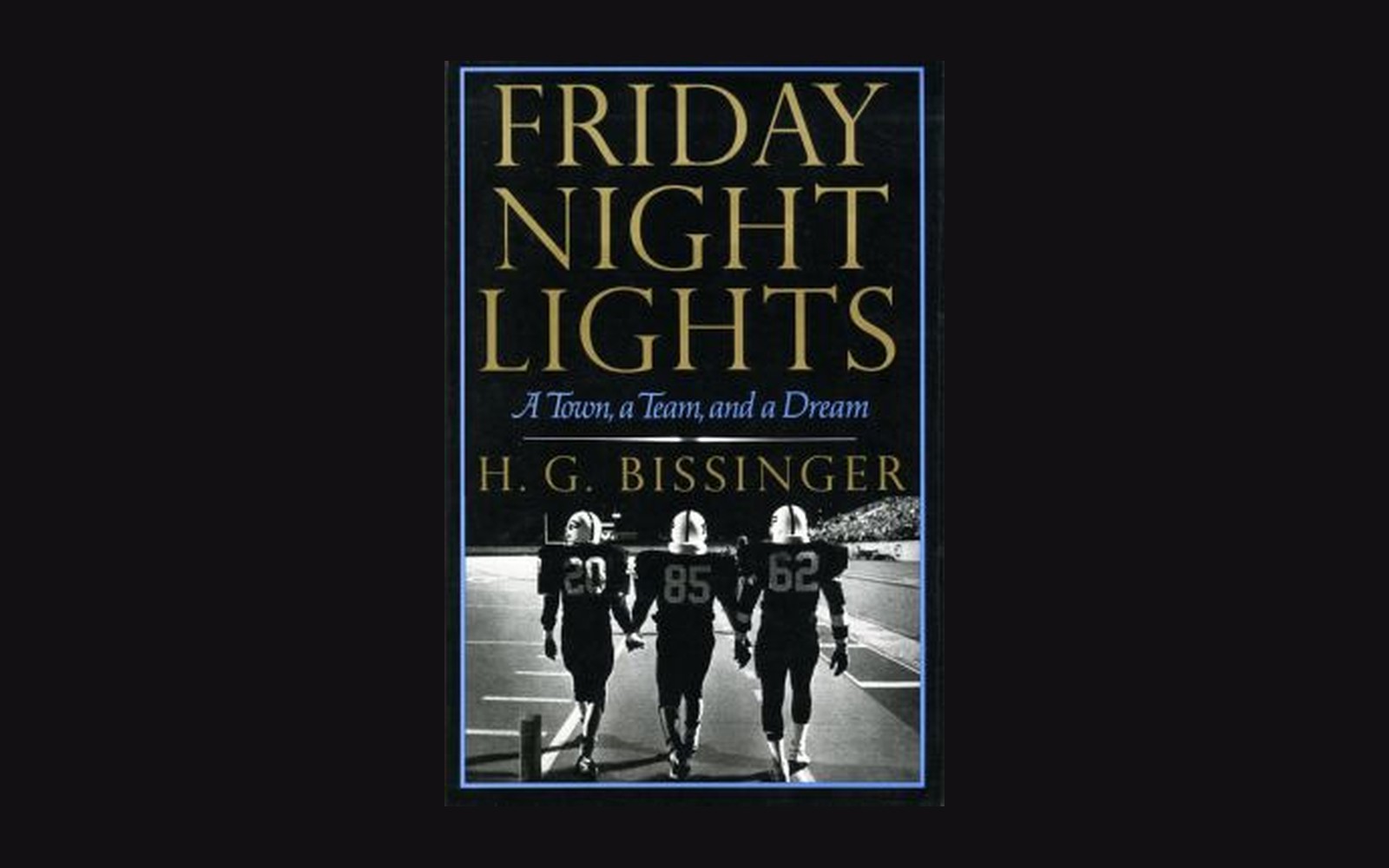
Addison-Wesley published the book in 1990, two years after the season it reports. The response was civic before it was literary, and the Texas press carried both halves.
Photo: Friday Night Lights: A Town, a Team, and a Dream · Wikimedia Commons · Photo: John Robertson / PexelsWhat the Method Produced
Because Bissinger spent a full calendar year in Odessa rather than reconstructing events after the fact, Friday Night Lights carries a texture of observed, present-tense detail that distinguishes it from conventional sports biography. He knew what the locker room smelled like in August. He was in the stands — and in the sideline cluster — when injury ended James "Boobie" Miles's season in a preseason scrimmage. He was present for the internal debates coaches had about strategy and personnel, debates that would never have been visible to a journalist working from post-season interviews.
The reporting method also gave Bissinger access to the economic and racial fabric of Odessa in ways that pure football coverage would have missed. He attended school board meetings, reviewed budget documents, and documented the disparity between the resources the district devoted to the football program and what it allocated to academic departments. Those findings — class sizes, textbook budgets, per-pupil expenditure figures — became the chapter-level data that gave the book its structural argument: that a community had organized its priorities around the stadium rather than the classroom. None of that material would have surfaced without Bissinger's physical presence over months, accumulating the paper trail and the candid conversations that people offer when a reporter has become part of the furniture.
The book that resulted received a National Book Critics Circle nomination and was ranked by Sports Illustrated among the finest works of American sports writing, a standing built directly on the depth of reporting that year of access made possible. The embedded method was its own argument: you could not have written Friday Night Lights in six weeks. The granularity of the human portraits — Boobie Miles's uncle L.V. hoping the injury would heal; Gary Gaines under pressure from boosters who treated his job as a performance contract — required time and proximity that no other approach could have provided.
The Exposure Problem
The agreement Gaines and Ector County ISD made with Bissinger appears to have included no contractual right of review over the manuscript. When Friday Night Lights was published by Addison-Wesley in 1990, Odessa encountered a portrait of itself it had not anticipated. The documented reception in Odessa was hostile: public statements from officials, criticism in local press, and a widespread sense among residents that Bissinger had used the intimacy the town granted him to deliver a prosecution rather than a profile.
The grievance had a specific character. It was not that the facts Bissinger reported were wrong — no successful libel claim against the book has entered the public record — but that the framing violated an implicit understanding. The coaches and administrators who opened their meetings to Bissinger had done so on a premise, never written down, that the project was sympathetic. What arrived instead was a work that used their cooperation as evidence. The budget documents they did not hide, the conversations held in front of Bissinger, the candid admissions of coaches about the pressure they faced from boosters: all of it appeared in print because the town had let a reporter stay long enough to see it.
This is a structural feature of embedded journalism rather than a betrayal specific to Bissinger. When a subject grants full access over an extended period, the journalist's obligations run to readers, not to sources. Bissinger had made no promises about the book's conclusions, and his reporting method — staying in Odessa long enough for people to forget he was working — was precisely what produced the material that made the book consequential. According to the University of Pennsylvania's Annenberg School for Communication, which has catalogued the ethical literature on embedded reporting, the central tension in long-form access journalism is exactly this: the access that produces depth also creates a relational context that sources later experience as betrayal, even when no misrepresentation has occurred.
The 1990 reaction in Odessa did not diminish the book's standing elsewhere. Peter Berg read it years later and saw a film, which eventually shot partly back at Ratliff Stadium. Jason Katims built a television series from the same DNA. The methodology Bissinger used — one embedded journalist, one full season, unrestricted presence — created an archive of observed life detailed enough to support two separate adaptations over two decades. That fertility was not accidental. It was the direct product of living in Odessa long enough to see what the town preferred to keep inside.