The Ordinary Marriage at the Center of Everything
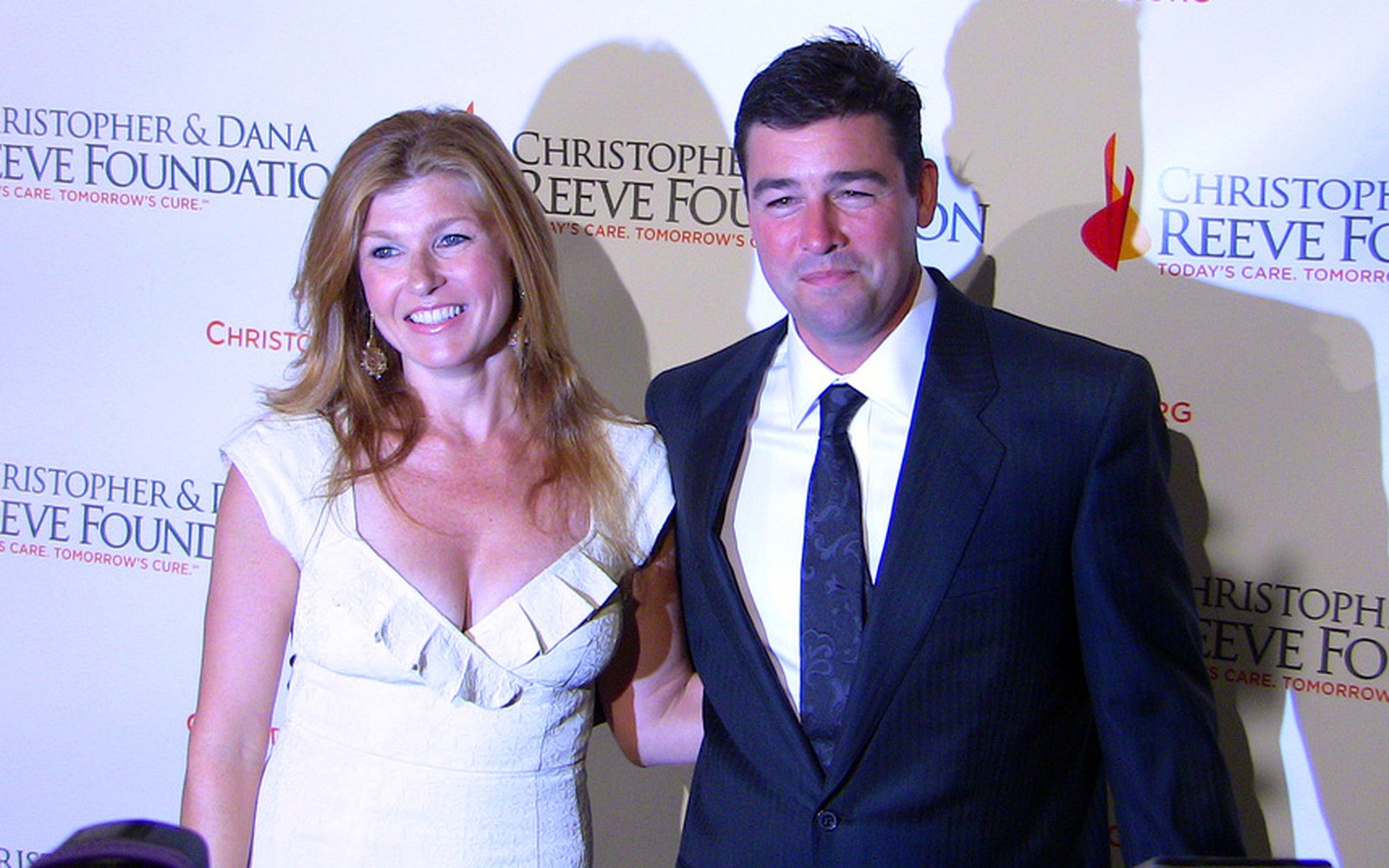
When NBC ordered Friday Night Lights to series in 2006, the network inherited a property built on football — on the Friday Night Lights mythology of Odessa, of Permian, of a town that measured itself in wins. What showrunner Jason Katims built instead was a marriage drama with football as its climate. The Taylors — head coach Eric Taylor and his wife Tami — became the structural spine of all five seasons, and Kyle Chandler and Connie Britton were the reason the architecture held.
Chandler had spent years in television, including a lead role on the short-lived Early Edition, without breaking through to the parts that required full emotional range. The role of Eric Taylor demanded exactly that. The character is steady to the point of stubbornness, a man who can give a locker-room speech that changes a teenager's trajectory and then completely fail to hear his wife across the dinner table. Chandler played that limitation without apology, which made Eric's rarer moments of tenderness genuinely costly. The performance avoided the inspirational-coach template at nearly every turn.


NBC carried the series first under the split-window arrangement; DirecTV paid for the rest. Three cameras ran loose on set and the dialogue was partly improvised.
Photo: NBC Tower - Exterior 9 · Wikimedia Commons · Photo: cottonbro studio / PexelsBritton arrived with strong television credits — Spin City, then the Friday Night Lights film itself, in which she played a smaller, less developed version of Tami. The series expanded the character into something the film could not accommodate: a school counselor and eventual principal navigating her own professional ambitions inside a town that thought of her primarily as the coach's wife. Britton's particular skill was making Tami's intelligence visible without editorializing. Tami knows what she knows; she waits for Eric to catch up; the wait is never quite without cost. That calibration, held across five seasons, is what earned Britton a Primetime Emmy Award for Outstanding Lead Actress in a Drama Series in 2010.
Chandler won the lead actor Emmy in 2011 — an outcome the series reached only because the DirecTV/NBC split-window arrangement kept production funded through seasons with ratings that NBC alone could not have justified. By the time the Academy of Television Arts and Sciences recognized both leads, the show had also drawn Emmy recognition for its writing. Critics who covered the awards cycle that year noted that the Television Critics Association had given the series its top drama prize years earlier, while network numbers remained modest enough to threaten cancellation.
The Taylor marriage worked on screen partly because Katims and his writers refused to treat it as a fixed point. Eric and Tami argue — about money, about career, about whose ambitions take precedence in a town that offers limited room for both. The series' fifth-season storyline, in which Tami receives a professional opportunity in Philadelphia that would require Eric to leave coaching in Texas, is structurally the whole show in miniature: two people who love each other discovering that love is not, by itself, a resolution. The handheld, partially improvised production method Katims's directors used across the run gave both actors room to find moments that scripted dialogue alone would not have located. Exchanges between Chandler and Britton frequently feel intercepted rather than performed.
What the series asked of both actors was something closer to long-form novel than conventional television. Characters change slowly, partially, and sometimes revert. Eric Taylor in season five is not the same man as in the pilot, but the differences are accumulative rather than dramatic. The same is true of Tami. Britton and Chandler each made that kind of incremental change legible over seventy-six episodes without ever underlining it — a technical demand that weekly episodic television rarely makes of its leads, and that both met consistently enough to draw the critical recognition that the show's ratings had long failed to generate on their own.
The phrase "Clear Eyes, Full Hearts" became the series' signature — Coach Taylor's mantra, Chandler's delivery, a line that traveled well beyond Dillon, Texas, into political campaigns and stadium scoreboards. But the image that stayed with critics was simpler: the two of them at a kitchen table, the season's crisis temporarily at bay, neither quite satisfied with how things stood. That was the show.